GENERAL GARDENING
POTATO PEELS: 7 Genius Ways to Reuse Them for Fertilizing and Pest Control
Most people peel their potatoes and throw the skins away without a second thought. But what many gardeners don’t realize is that those humble scraps are full of nutrients and hidden potential.
Potato peels can become one of your garden’s best organic fertilizers and even a natural pest control solution.
Rich in potassium, phosphorus, calcium, magnesium, and starch, potato peels feed plants, nourish soil microbes, and keep pests under control – all while helping you reduce waste at home.
Instead of tossing them, you can turn these simple kitchen leftovers into powerful garden helpers.
Why Potato Peels Are So Valuable for the Garden
Potato peels are packed with essential nutrients that your plants need to thrive. They contain potassium, which improves root growth and disease resistance; phosphorus, which helps with flowering and fruiting; magnesium and iron, which keep leaves green and vibrant; and calcium, which strengthens cell walls and prevents disorders like blossom-end rot.
Beyond nutrients, potato peels add valuable organic matter to the soil. As they break down, they feed beneficial microbes, improve soil structure, and increase its ability to retain moisture.
In short, they are a free, slow-release organic fertilizer that supports long-term soil health.
A Few Precautions Before You Start
Always make sure your peels come from healthy, disease-free potatoes. If your potatoes show signs of rot, mold, or blight, discard them instead of using them in the garden.
It’s also best to avoid tossing raw peels directly onto the soil, as they can attract rodents and insects. Instead, boil, dry, or compost them before applying.
1. Make a Potato Peel Fertilizer Tea
This simple homemade fertilizer delivers nutrients straight to your plants in liquid form. To make it, add a handful or two of potato peels to a pot of water and boil for about 10 to 15 minutes.
Let the mixture cool, strain out the peels, and pour the liquid around the base of your plants.
This “potato peel tea” provides potassium, phosphorus, and trace minerals that promote flowering and fruiting. It’s especially beneficial for tomatoes, peppers, and roses. You can use it every couple of weeks to keep your plants nourished and growing vigorously.
2. Dry and Crush Peels for a Slow-Release Fertilizer
If you prefer a more long-term solution, dried potato peels can be turned into a powder that feeds plants gradually over time.
Spread the peels on a tray and dry them in the sun for a few days, or in a low oven until crisp. Once dry, crush them into small flakes or grind them into powder.
You can mix this powder into the soil when planting new seedlings or sprinkle it around established plants as a natural fertilizer.
As it decomposes, it releases nutrients slowly, improving both soil fertility and texture.
3. Add Potato Peels to the Compost Pile
Composting potato peels is one of the easiest and most effective ways to recycle them. They break down quickly and help balance the nitrogen and carbon levels in your compost.
Simply add peels in thin layers, mixing them with dry materials such as leaves or shredded paper to prevent odors and keep the pile aerated.
If you want to speed up decomposition, boil or crush the peels before adding them. In a few months, they’ll turn into rich, dark compost that can be used to feed your garden beds naturally.
4. Use Potato Peels as a Root Booster
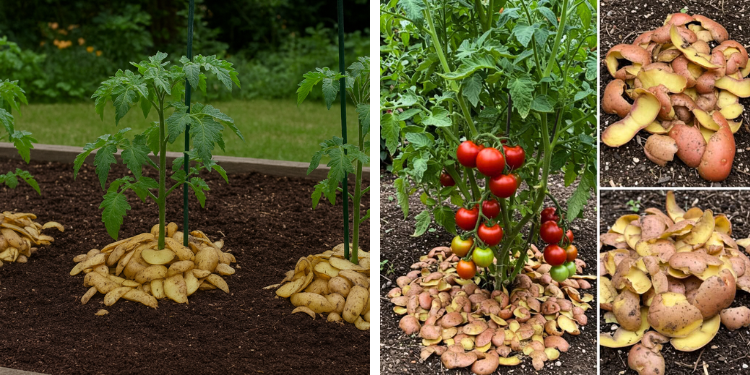
Placing potato peels beneath seedlings is an old gardener’s trick for promoting strong root growth.
As the peels decompose, they release phosphorus and potassium directly at the root level, where young plants need it most.
To use this method, dig a small hole before planting, place a handful of chopped peels at the bottom, cover them lightly with soil, and then set your seedling in place. This works particularly well for tomatoes, cucumbers, peppers, and zucchini.
5. Use Potato Peels for Pest Control
While potato peels feed plants, they can also help reduce pest problems. Slugs, snails, and cutworms are drawn to the starch and sugars in the peels, making them perfect natural traps.
Place a few raw peels around the base of affected plants in the evening. By morning, you’ll often find pests gathered on or under them.
Collect the peels with the pests attached and remove them from your garden. Repeat as needed during the growing season.
You can also boil potato peels, let the liquid cool, and use it as a mild spray for aphid control. The natural compounds in the peels can help deter soft-bodied insects without harming your plants.
6. Feed the Soil Microbes
Healthy soil depends on a thriving community of microorganisms that break down organic matter and release nutrients to plants. Potato peels provide an excellent food source for these microbes.
You can chop peels into small pieces and bury them a few inches deep in your garden beds. This encourages microbial activity, improves soil aeration, and enhances nutrient availability.
Over time, this simple habit can transform depleted soil into rich, living earth.
7. Revive Tired or Depleted Soil
If your garden soil has become compacted or nutrient-poor, potato peels can help restore its vitality. Blend a handful of peels with a little water to create a thick paste or slurry.
Mix this directly into the soil before planting or spread it as a natural amendment between crops.
As the peels decompose, they add organic matter and minerals, improving the soil’s structure and moisture balance. This method is especially useful after heavy-feeding crops such as corn, tomatoes, or cabbage.
Bonus: Combine Potato Peels with Other Kitchen Scraps
For an even more balanced homemade fertilizer, mix potato peels with other nutrient-rich kitchen waste. Banana peels add extra potassium and calcium, eggshells provide calcium, and coffee grounds contribute nitrogen.
Together, these scraps create a nutrient-dense mix that feeds your garden more completely than a single ingredient alone.
Common Mistakes to Avoid
Avoid using green or sprouted peels, which contain solanine – a natural toxin that can harm soil life in large amounts.
Always bury or compost peels rather than leaving them exposed on the surface, and don’t overuse them in one area.
Like all organic matter, they should be applied moderately and regularly rather than in large amounts at once.
Why Potato Peels Outperform Synthetic Fertilizers
Chemical fertilizers may give quick results, but they do little for long-term soil health. Potato peels, on the other hand, provide nutrients slowly and improve the living structure of your soil.
They encourage microbial activity, add organic matter, and help balance moisture and aeration. They’re also completely free and environmentally friendly, making them one of the most sustainable garden amendments you can use.
How Often to Use Potato Peels
Use liquid potato peel fertilizer every two weeks for a steady nutrient boost. Dried peel powder can be added monthly, while compost or buried peels can be worked into the soil as needed throughout the growing season.
For pest traps, use fresh peels whenever you notice slug or worm activity.
Potato peels are a simple reminder that nothing in nature truly goes to waste. What most people see as kitchen scraps can become a source of nourishment, protection, and renewal for your garden.